


Introduction
AI is changing how people work every day. This change is real and already here. Many jobs look different now than before.
Some people feel worried about this shift. They think AI will take their jobs. That can happen in some cases. But that is not the full picture.
AI is not just removing jobs. They are also innovating and creating new processes.
What AI Means for Work
AI allows humans to be much more productive in their work because it enables them to produce text faster, find solutions to problems faster, and help with the analysis of data more easily than ever before. Tools like ChatGPT show how simple this can be.
Think about daily tasks at work. Writing reports used to take a long time. Now AI can help you finish faster. This saves time and energy.
Your role does not disappear. It shifts. You spend more time thinking and less time doing simple tasks.
Why Some Jobs Are Going Away
AI will replace all forms of repetitive activities, particularly those where there is a fixed pattern associated with the tasks that need to be performed. After learning how to carry out a task from a defined sequence of events (i.e., a predetermined set of rules), AI can complete the same task much quicker than any human can, and without needing rest.
Data entry and other low-level support operations are two examples of these types of positions that are currently experiencing a gradual decline in number.
Companies choose faster options when they can. This is normal in business. It is not new. AI just makes the change faster.
If a job does not grow or change, it becomes easier to replace.
Why New Jobs Are Growing
AI also creates new types of work. Every tool needs people to build it and manage it. This creates demand for new skills.
Online work is a clear example. AI technology is now being used by writers, designers, and marketers. They can complete their tasks in less time and take up many more projects
This implies that in less time, one individual can handle more tasks. Money-making opportunities increase for those who master themselves in using AI technology.
How Jobs Are Changing in Real Life
AI is used in many fields now. Each field changes in its own way.
In healthcare, doctors use AI to check results faster. This makes them better decision-makers. AI is responsible for preventing fraudulent activities and securing funds in banks. In educational institutions, learners rely on AI technology for self-paced learning.
The task remains intact. However, the method employed is different.
Employees now concentrate on intellectual work instead of routine tasks.
What Skills Matter Now
Basic tech skills are now part of most jobs. You need to know how to use tools, not avoid them.
Creativity is also essential in this case. Although AI will be able to follow rules, it will not be able to think like humans. Creativity is still provided by human beings.
Learning new skills is now a must. The job market changes fast. People who keep learning stay ready.
What the Future Looks Like
AI will not replace all workers. It will change how work is shared.
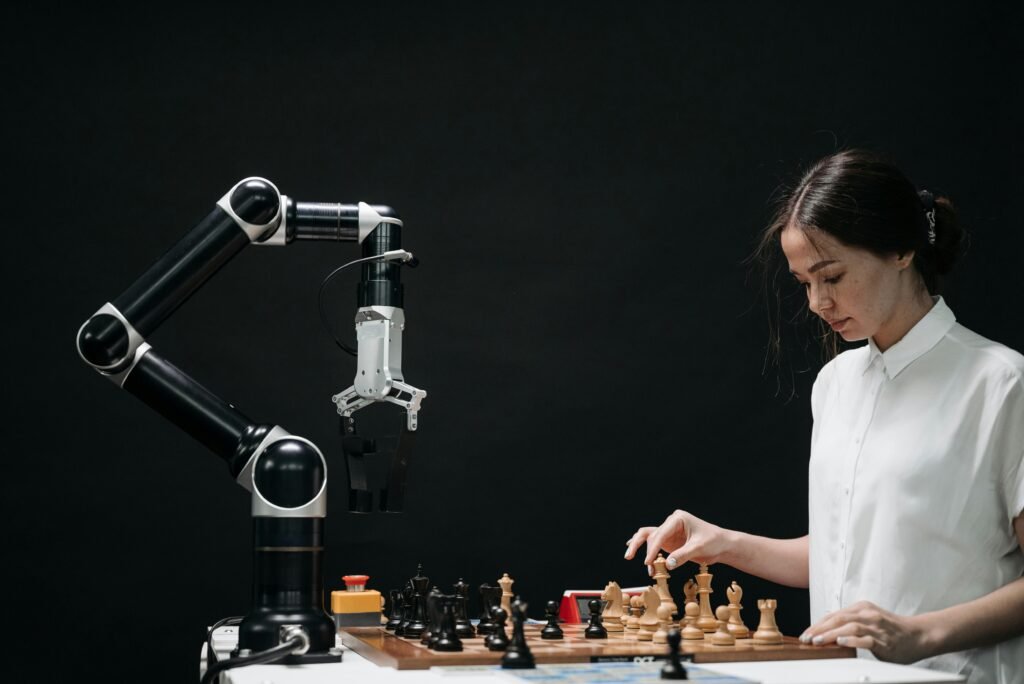
Apparatuses can take care of routine operations. Human beings take care of cognitive functions.
This forms a whole new method of collaboration between man and machine.
Those who adapt will find more chances. Those who resist will face more limits.
Conclusion
The influence of artificial intelligence on occupations is global in nature. Artificial intelligence will make the processes of performing jobs faster, more rational, and more productive. Certain occupations have started to undergo changes, whereas other occupations are rising in demand. Individuals who possess contemporary skills and use artificial intelligence effectively can enjoy its benefits.
What is Artificial Intelligence (AI)?
Artificial Intelligence (AI) is technology that allows machines and software to perform tasks that usually need human intelligence. These tasks include writing, problem solving, data analysis, image creation, and customer support.
How is AI changing jobs?
AI is changing jobs by automating repetitive tasks, improving productivity, and creating new job opportunities. Many industries now use AI to save time, reduce costs, and improve work quality.
Which jobs are most affected by AI?
Jobs involving routine and repetitive tasks are most affected by AI. Examples include data entry, customer service, manufacturing, bookkeeping, and basic content creation.
Can AI replace human workers?
AI can replace some tasks, but not all human workers. Many jobs still need creativity, emotional intelligence, decision-making, and human communication.
What new jobs are created by AI?
AI is creating new careers such as AI engineers, machine learning specialists, prompt engineers, AI ethics experts, and data analysts.